Mind Body Music School
June Term at MBMS
Two Intensive Online Courses for Musicians
Start Here
Dear fellow musician,
If pain or fear are getting in the way of the music you want to make, I’d like to invite you to our June term courses: Playing With(out) Pain and Performing With(out) Fear.
These courses address two major gaps in the music education system. Each course, while sharing the same structure and format, has a slightly different feel.
Playing With(out) Pain is designed for: 1) those who are currently dealing with acute injury or chronic pain 2) those who want to prevent pain and injury 3) music teachers who want new tools for working with students in pain.
Performing With(out) Fear is for any musician who wants to learn a joy-based approach to music performance. And for music teachers seeking deeper ways to help their students with their fear and anxiety challenges.
Each course is about learning by doing, not just observing and listening. There will be lots of exercises, experiments, games and one-on-one coaching sessions (done with volunteers in front of the group) to bring the concepts to life.
This is true embodied learning.
If what you read here speaks to you, I hope you’ll consider joining us.
Joyfully,
Peter
Course One
Playing With(out) Pain
The Alexander Technique & Pain Science for Musicians
From Peter Jacobson, Founder of Mind Body Music School
If pain is getting in the way of your music-making, let me first say that I’m sorry you’re dealing with this. I know firsthand how frustrating and even demoralizing it can be when it hurts to do the thing you love most.
Second, please know you’re not alone. Consider this shocking stat: Up to 90% of instrumentalists will experience pain at some point in their career.
That’s more than just data. That’s an occupational hazard.
Yet, how many musicians are taught the truth about pain, why it happens and what to do when it shows up? This is a MAJOR gap in our music education system.
There were 2 turning points in my pain journey that changed everything:
- Discovering and studying the Alexander Technique in my early 20s, which helped me recover from persistent low back pain
- Learning about modern pain science about 18 months ago, which is now helping me recover from chronic tendonitis
Those two experiences are the foundation of this course.
I’m delighted to co-teaching this course with Alexander teacher and pain therapist Mari Hodges. Mari co-taught the pain science course I took in 2024 and her knowledge and expertise will be an essential part of the learning.
What You’ll Experience
This course is about creating new, hopeful possibilities for your music-making. We aren’t promising all your pain will be gone in 3.5 weeks. But we will help you move towards a future where you know what to do if and when pain shows up. Where you look forward to practicing and rehearsing with anticipation instead of dread. And where you feel like playing your instrument is a source of joy again.
Yes, you’ll learn the latest research from modern pain science and the basic principles of the Alexander Technique in this course. But the real impact is in the experience of learning to feel safe and supported in your body again.
Who This Course Is For
This course is for musicians who want more than coping strategies and pain management tips. It’s for people who want to do the deeper work of exploring the root causes of their pain. And who understand that real change takes time.
It’s also for musicians in pain who have been frustrated by the standard interventions for pain and injury. And who are open to different ways of thinking about and exploring pain recovery.
This is not a quick fix course. This is deep nervous system rewiring work. That takes time which happens slowly. The most hopeful thing about this approach is that lasting change is indeed possible. If you’re ready for that kind of work, we’d love to have you on the course with us.
The Curriculum
Each class pairs a pain science theme with a mind-body practice informed by the Alexander Technique.
Class 1: Rethinking Pain
- Common ways of thinking about pain that may not be accurate or useful
- The biopsychosocial model: a whole-person framework that goes beyond the separation of mind and body
- Practice #1: Centering – Getting Oriented Toward Safety
Class 2: The Nature of Pain
- The multidimensional nature of pain including its sensory, emotional and cognitive dimensions
- The relationship between pain, attention and suffering
- Practice #2: Breathing – The Great Unifier
Class 3: What Contributes to Pain
- Mapping the lifestyle factors that contribute to pain
- Noticing where you perceive danger, where you perceive safety, and where you can do less
- Practice #3: Befriending – Exploring How You Relate to Pain
Class 4: How Pain Becomes Chronic
- The physiology of pain and how a sensitized nervous system keeps producing pain after tissues have healed
- Pacing, graded exposure, and finding your sweet zone of activity
- Practice #4: Choosing – Daring to Play
Class 5: Stress & Agency
- The stress-pain connection and what agency really means in recovery
- Building a personal flare-up plan
- Practice #5: Coordinating – How to Work With Your Body
Class 6: The Deeper Meaning of Pain
- How pain and suffering can fuel personal, artistic and spiritual growth
- How your personal narrative shapes how you experience pain
- Practice #6: Resting – The Art of Just Being
Class 7: Integration
- Bringing it all together: understand, feel, and be safe to move
- Building your personal recovery roadmap
- Practice #7: Integrating – Deepening Into Change
All participants will receive a substantive course handbook, Playing With(out) Pain, co-authored by Mari and Peter.
If you’re seriously drawn to this course and currently under-resourced financially, please be in touch. We’ll see what we can work out.
Course Two
Performing With(out) Fear
Choosing Joy, Courage & Connection in Musical Communication
From Peter Jacobson, Founder of Mind Body Music School
Despite all the research and proposed interventions out there, performing-related fear and anxiety continues to hold musicians back from expressing themselves fully and authentically.
One of the main reasons is that, like pain education, performing skills are largely absent from most musicians’ training. And so instead they get fed the same old stale advice: relax, calm down, and take deep breaths. Many musicians are even told to ignore the audience entirely (or worse yet, imagine them in their underwear, which has to be the stupidest piece of advice ever given!).
During my twelve years as a performance coach (among other things), I’ve learned that what performers really need is information and a performance plan grounded in reality. And to learn how to both skillfully engage with an audience and bridge the chasm between the practice room and the performing stage.
This course is about making that shift.
What’s Possible
There’s a moment that almost every performer knows. When you’re no longer playing but being played. Not singing but being sung. You’ve transcended yourself and disappeared into the music.
You are now a medium that sends the music directly to the hearts and souls of your listeners.
You’ve made the leap from fear to service and worry to connection.
That’s what’s possible. And that’s what we’ll be exploring.
Who This Course Is For
This course is open to musicians of any musical style or skill level who are ready to address the root causes of their fear and anxiety in performance. And for music teachers who want evidence-based, stress-tested ideas from the Alexander Technique and performance psychology to help their students in a deeper way.
Like the pain course, this one too is about fundamental change. We’ll be doing deep, personal work. On your identity as a musician, the stories you tell about yourself (that may or may not be serving you) and how to work with your whole, unified self in performance. If you’re ready to engage fully in this process, I’m confident you’ll begin to experience a major shift in how you approach performing. Something you can build on for the rest of your performing career.
The Curriculum
This course is built on two things working together: a complete performance framework and live performance coaching with me.
The Framework: 6 Lenses on Performance
Every performing moment has at least six dimensions happening simultaneously:
- The Spiritual Lens: the deeper meaning and larger purpose of your work
- The Physical Lens: knowing how to somatically work with performance energy
- The Emotional Lens: how motion elicits emotion and action creates affect
- The Mental Lens: how to think consciously, clearly and constructively
- The Musical Lens: knowing what you want to express, in advance and in the moment
- The Social Lens: how you relate to the other humans in the room (colleagues and audience alike)
We’ll spend the course exploring each lens in depth as well as how they come together as a whole. You’ll also learn how to use the 6 lenses as a diagnostic tool.
Live Performance Lab & Coaching with Peter
Every class will include a performance lab open to volunteers who want to receive real-time coaching with me. You may also request input from your fellow participants. Receiving input from fellow musicians can be delicate. But it can also be extremely valuable. We never really know how we occur to others unless we ask them. How to facilitate group input is something I’ve thought a lot about and have a lot of experience with so you can rest assured it will be a positive experience.
The coaching is where the 6 lenses framework comes alive. You’ll get to see how you can apply the lenses whether you raise your hand to perform or just prefer to observe.
All participants will receive a substantive course handbook, Performing With(out) Fear, written by me.
If you’re seriously drawn to this course and currently under-resourced financially, please be in touch. We’ll see what we can work out.
Teachers
About Your Instructors

Mari Hodges
MScMed (Pain Management), TPS, M.AmSAT
Mari is no stranger to pain. Chronic neck and back pain led her to the Alexander Technique, and her own recovery inspired a deep dive into pain science that took her all the way to a Master’s of Science in Medicine in Pain Management from the University of Sydney. She also holds a Therapeutic Pain Specialist certificate from Purdue University and completed her Alexander Technique training in Buenos Aires.
Mari runs a private practice as an AT teacher and pain coach, teaches pain science courses at the University of Montana and through Science of Somatics, and founded the volunteer PainSavvy Walk & Talk community program. She’s also a violinist who has played in La Academia Tango Club. When she’s not reading up on pain science, you can find her cross-country skiing or dancing tango.
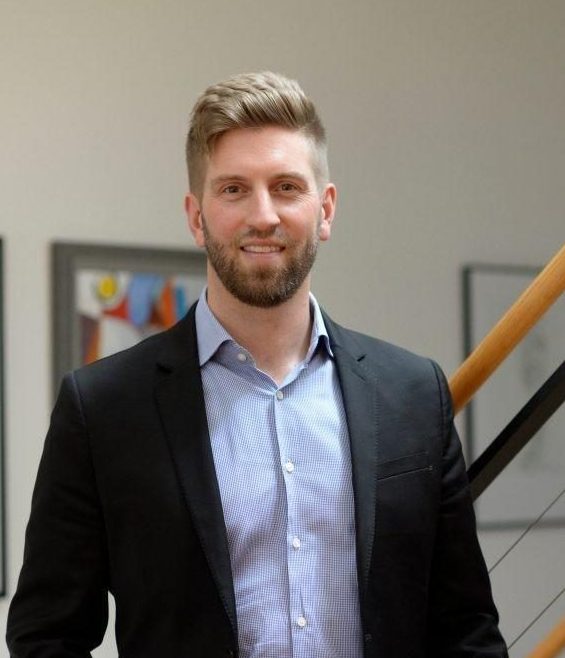
Peter Jacobson
M.M., G.P.D., Certified Transformative Life Coach
Peter is the founder of Mind Body Music School and has been teaching the Alexander Technique for 12 years and music for 25 years. His work stands at the intersection of music, healing, learning and creativity. He is also a passionate advocate of entrepreneurship, using innovation and ingenuity to address long-standing problems in the music field.
Peter holds music degrees from Concordia College-Moorhead, Peabody Institute and the University of Illinois and has taught workshops at institutions across the US and Europe. He lives in St. Paul, Minnesota, where you’ll find him playing a racket sport, reading 7 books at once, or cooking up something tasty in the kitchen.
From Past Students
Testimonials
“I started playing the cello again since my shoulder injury and it was incredible how much what we did in the classes helped me. I’m so happy!”
— Paula, cellist (Mari)
“You’ve given me new tools to add to my pain management toolbox. I can help myself in more ways than one in dealing with pain. I feel hopeful and capable. Thank you, Mari!”
— Rita W. (Mari)
“To tune into what happens in the body in performance, not with judgement but curiosity and a sense of okay, opens up new vistas for musical connection and expression. It’s a deep practice.”
— Matthew B., guitarist & singer (Peter)
“I now have so many more tools, and fear doesn’t have to be an option anymore. I’ve realized I have the freedom to explore music in my own way, even to the point of improvising my own cadenzas, which I never thought I could do before.”
— Laura C., vocalist & teacher (Peter)
Included
What Every Participant Gets
- 7 live classes on Zoom (90 minutes each, all recorded)
- A comprehensive course handbook written specifically for your course
- An online community forum on Circle
- Certificate of completion available for participants who complete additional coursework (required readings and a reflection paper, 15 hours total)
Still Curious?